Noakhali
•
14 DECEMBER 2025
•
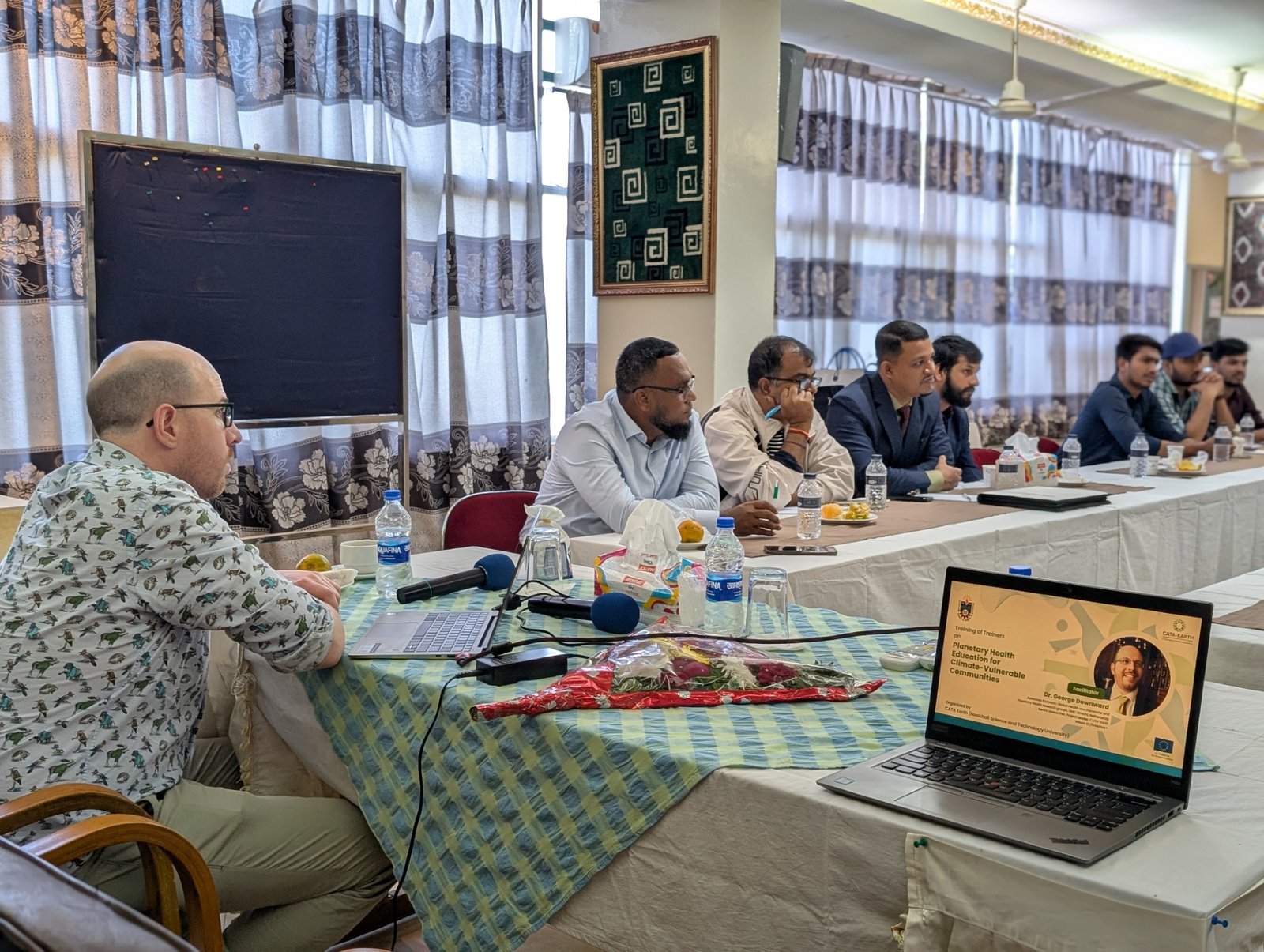
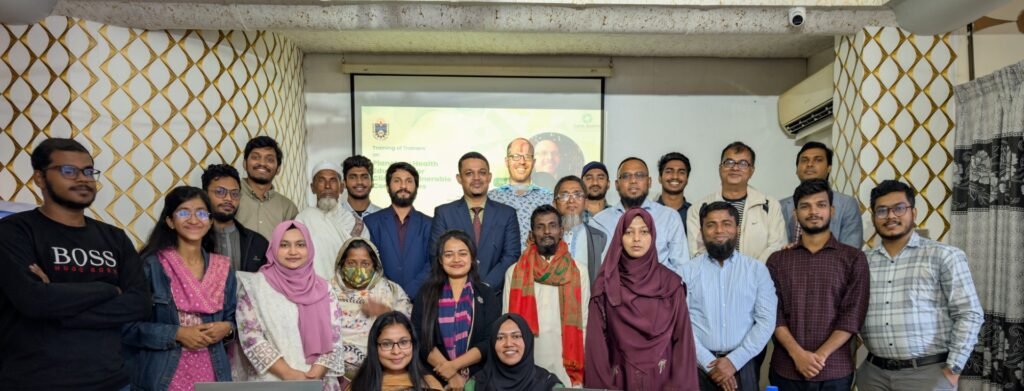
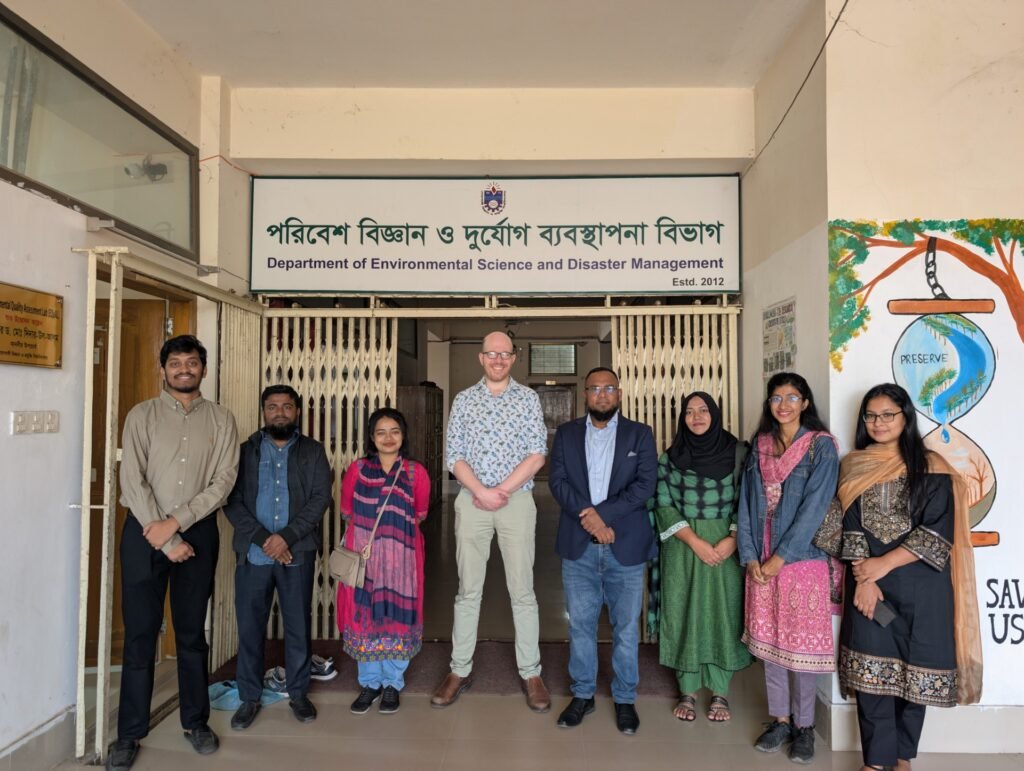
On 12 December 2025, the Training of Trainers (ToT) on Planetary Health Education was held at the Nice Guest House, Noakhali, Bangladesh, from 10:00 AM to 12:00 PM. The session was hosted by Noakhali Science and Technology University (NSTU) under the CATA-Earth (Climate Action through Academic-Community Partnership) initiative. The training was facilitated by Dr. George Downward (UMC Utrecht), who guided the session as both an academic lead and a project liaison connected to the broader Erasmus+ partnership. The event brought together 26 participants, including project leads, academicians, students, and community members from Tankir Shomaj, Hatiya. The group composition created a learning environment where academic perspectives and community realities could sit side-by-side—ensuring that planetary health was discussed not only as a concept, but as a lived and locally relevant issue.
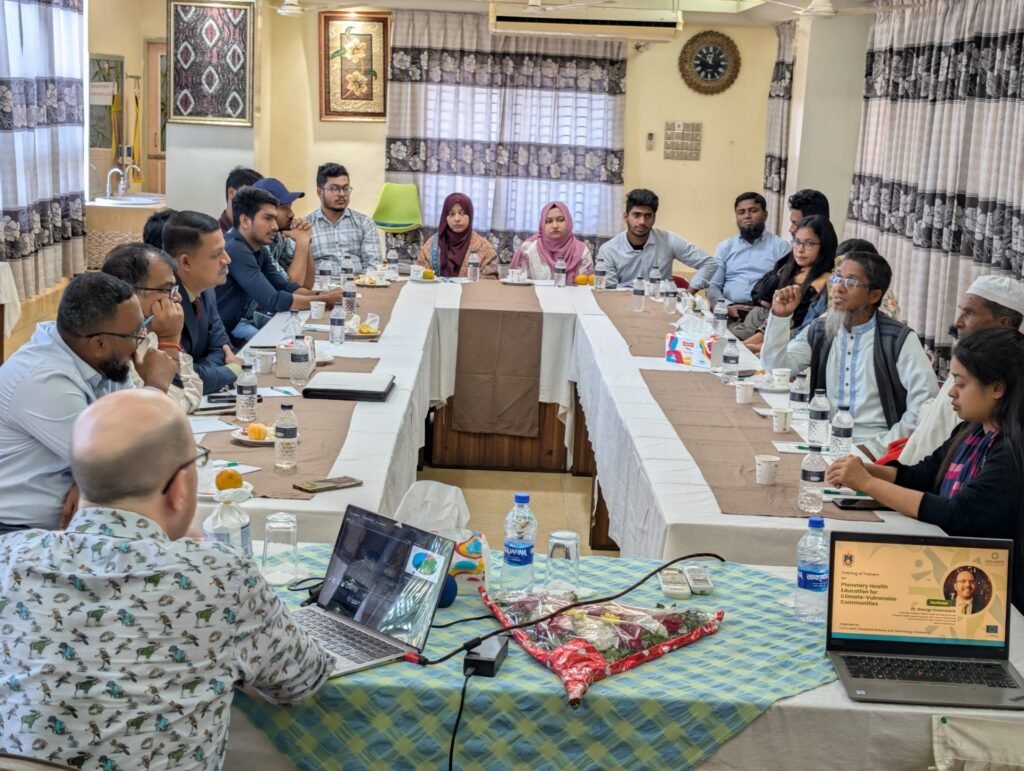
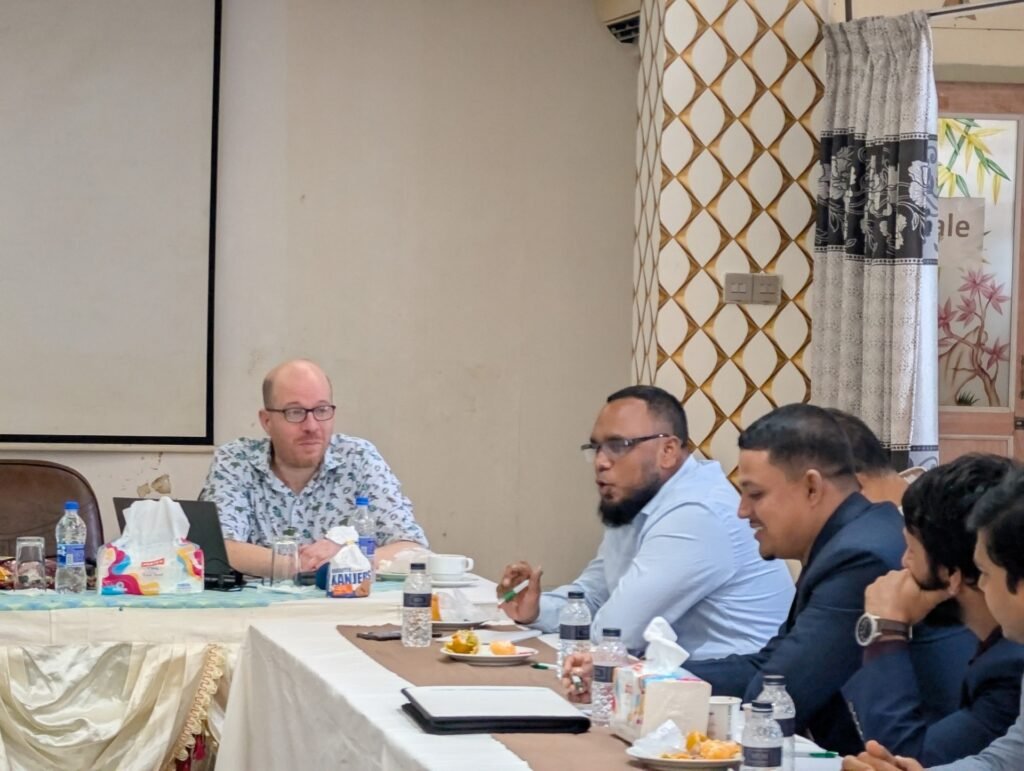
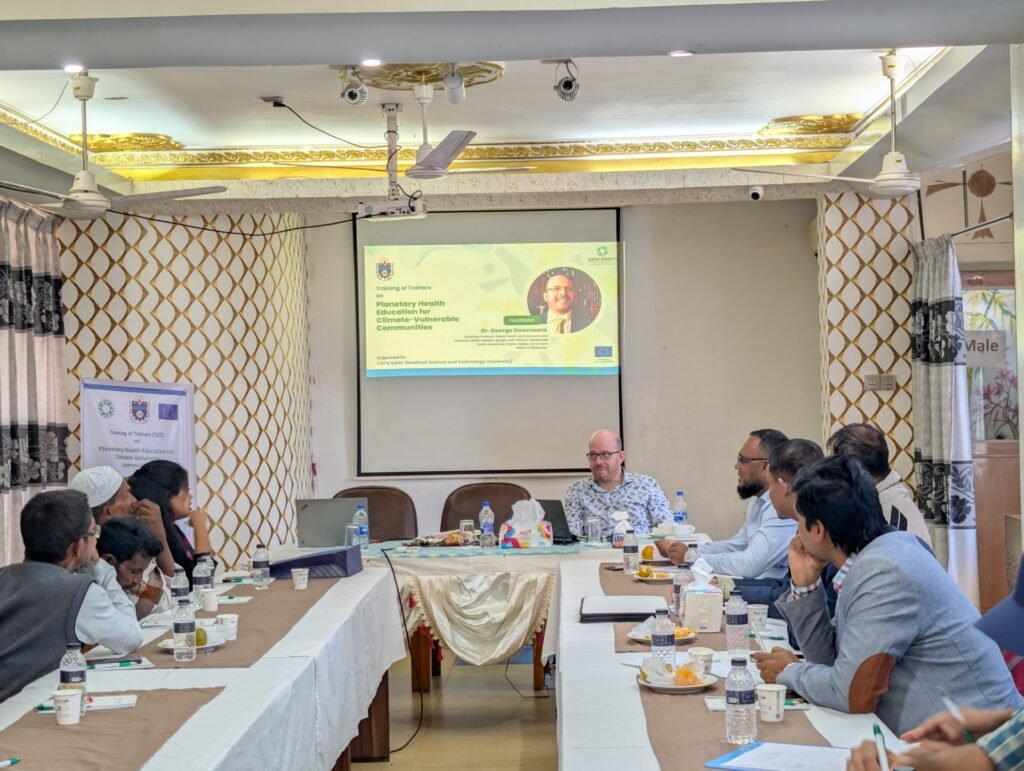
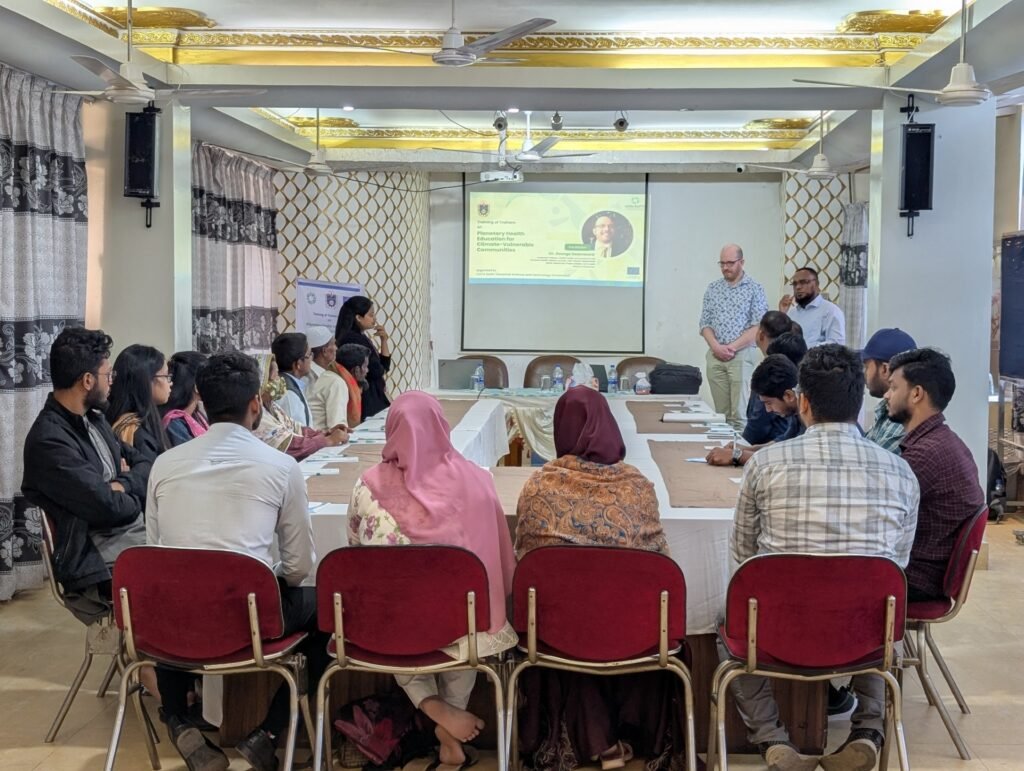
Throughout the session, planetary health was presented as a holistic approach that connects human wellbeing to the condition of natural systems, emphasizing that environmental change is not separate from public health but a direct driver of it. The discussion underscored how climate-related stressors—alongside environmental degradation such as pollution and biodiversity loss—can accumulate into long-term health burdens, especially when communities face repeated exposure to hazards and limited adaptive capacity. The training also linked these ideas to broader global efforts in planetary health education and advocacy, while keeping the focus grounded in the needs and contexts of vulnerable regions.
The ToT additionally introduced the CATA-Earth project framework, highlighting education as a practical pathway for strengthening resilience and supporting locally relevant responses. Rather than relying on generic examples, the session emphasized the value of context-specific learning materials and university curricula that reflect Bangladesh’s climate–health challenges and can be used by educators, students, and practitioners. A key strength of the training was the inclusion of community voices from Hatiya, who described everyday impacts that make the climate–health connection tangible, including concerns related to saline drinking water, river erosion and displacement, and the disruptive effects of cyclones on livelihoods, agriculture, and nutrition. These contributions reinforced that community knowledge is essential for shaping education that is credible, applicable, and aligned with local priorities.
By the end of the program, participants left with a clearer, shared understanding of the climate–health–environment nexus and a stronger readiness to communicate these linkages within their institutions and communities. The training also strengthened collaboration between UMC Utrecht, NSTU, and frontline community stakeholders, contributing to momentum for embedding planetary health more formally into NSTU’s academic direction and for expanding community-engaged learning under the CATA-Earth partnership.


 Indonesian
  English